
Is that the Right Patient?

Today, we welcome a guest post from Iatric Systems.


Meaningful Use brings increased utilization of electronic records, providing instant access to patients’ medical information – which is a great thing. It also brings the heightened chance for error in patient identification and the subsequent disaster that creates. The ability to select the correct patient and verify their identity based on their prior visit medical record demographics from the health information system becomes more important than ever before. Misidentification at the point of entry creates major problems throughout the life of the patient’s account.  First and foremost is the contamination of the patient’s medical chart and the impact incorrect medical information could present to the patient. We could contend that cleaning up incorrect patient information was in some ways easier when everything was paper-based compared to what it will be with electronic records.

The HIPAA impact of sharing the incorrectly selected patient’s information with the wrong patient or patient’s family also looms on the horizon. What if the patient who the record really belongs to shows up for care during this event? If the error goes unnoticed, the backend ramifications include billing the wrong insurance company and incorrect data going out to multiple places resulting in more work to correct the error and rebill the correct payer. If the patient finds out you selected the wrong patient for their care episode, how does that impact their perception of the hospital and level of competent care they can expect?

Many factors impact the incorrect selection of a patient, including the HIS system, staff carelessness or patients providing incorrect information during the admitting process. A common error is the patient changing their last name since the last visit, thus creating a new MPI number that does not include the patient’s vital past medical history.

Another area of concern is medical identify theft. Over 14 million people have become victims of identity theft this year alone. Medical identify theft is the fastest growing aspect of identify theft. What ramifications can you expect if your hospital provides care to a patient who used a stolen medical identify for treatment? Both a contaminated medical record that may impact the care of both patients and a financial loss when the payor denies payment may result.

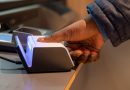
Never before has selecting the correct patient at registration been more important. Our current method of asking for a driver’s license to verify identity is no longer a guarantee. Hospitals need to look at new methods to make sure that the patient is correct. Biometrics is one possibility that I have felt is an effective solution for years. Patients, for the most part, show up in the hospital with a finger, palm or iris that could be used to validate the patient’s identify. Patients that arrive unconscious pose another level of concern.

What better community service could a hospital provide than assuring their patients that their identify will be protected by installing biometric technology? Biometric technology could also assist with the Red Flag regulation. Providing patients an easy way to establish identify by hosting health fairs to register their biometric identify in advance of care is both a community service and improves each patient’s medical safety.

Iatric Systems

Kay Jackson

Kay Jackson is Manager of Software Certification, Compliance and Financial at Iatric Systems. Iatric Systems provides solutions for Meaningful Use including a Meaningful Use Manager Dashboard, Public Health Interfaces, Patient Portal, CPOE, Patient Discharge instructions and Clinical Document Exchange.

You can follow Iatric Systems on Twitter: @IatricSystems
You can also find them on LinkedIn


The Antidote to Stress and Worry for Retailers

Retail Smart Guys

In celebration of the National Retail Federation’s Annual “Retail’s Big Show Convention” this week, we welcomed a guest post from Dan Jablons at Retail Smart Guys. Dan was recently our guest on the monthly #biometricchat where he talked about the value of using biometric technology in a retail environment, especially at point-of-sale for employees. For a copy of that chat transcript, please click here.


I’d like to tell you that this idea came to me while “contemplating in my study” or something as academic and erudite as that.  Truth is, it just sorta came to me while working with a prospective client.  And after it hit me, I realized that this is the basis for survival for all of us.

The person I was working with was in tears.  Too many bills, not enough sales, and their retail business was in great danger.  This person was in a constant state of unbridled worry, sleepless nights, and economic torture.  I suppose we’ve all been through that to some degree or another, and I really just wanted to help that person through this disaster.

It got me thinking about the causes of such stress and worry.  Granted, sales have been down (although they are picking up in some areas), and times are definitely tougher now than they were years ago.  I suppose there are some people who can just naturally handle the stress better than others, or who can simply shake off the bad news.  But that doesn’t really help the people who need help, who are stressed out and need relief.

That’s when it hit me.  It’s a pretty simple solution, amazingly enough.

Worry and stress happen because of uncertainty.  If you are uncertain that you’ll survive, or how you’ll survive, you will worry because the path to success, freedom, and happier times is not visible to you.  As such, everything you look at becomes a problem, everyone you talk to makes you crazy, and life is just unlivable.  Pretty awful.

So what’s the answer?  The antidote to worry and stress is a solid plan, which followed step-by-step would lead you out of the mess you are in, into success.  Simple, right?

The hard part is coming up with the plan, and I believe that it is a rare individual that can do it alone.  Consider this analogy: if you are lost in the woods, you’d need someone who can see where you are, relative to the main road, to help you find your way out.  You might find your own way out, but you’ll wander those dark scary woods alone for a long time before you make it out, and that’s IF you can make it out.

The plan will come from a variety of resources – for retailers, we collect data from their point of sale system, which helps us see the current situation and all the elements that led to it (what was received, what was sold, what we’re stuck with, etc.).  From there, we can look at the current data and derive a solution that gets the retailer out of trouble.  Sure, it’s not easy, and it’s never a quick fix, but with hard work, patience, and most importantly, a solid plan, you can solve anything.

I’ve actually seen this work by applying it to myself.  If I find myself worried about an action plan, a client, or any other area, I call in the experts.  They help me see what I cannot see.  They help me to know what I don’t know, what I cannot figure out on my own, etc.  It plainly, simply, works.

So if you are a retailer and you are struggling, or are worried or stressed out, get a plan.  Contact me for help.

You can also follow Dan on Twitter @danjab


University of Maine Deploys @M2SYS Palm Vein Scanners for Student Check-In at Dining Halls

Palm vein scanners and multi-biometric software to eliminate students sharing meal plans

The University of Maine

Today we announced that the University of Maine has deployed the M2SYS palm vein scanner with our Hybrid Bio Snap-OnPlatform and Hybrid Bio-Hyperpliance Multi-Biometric Identification Matching Server software for student check-in at their on-campus dining halls. The goal for the deployment is to use the palm vein scanner to more effectively track dining hall traffic and eliminate shared cards where students share their meal plans at a price of $4,100 per academic year.

University of Maine officials chose the comprehensive M2SYS Hybrid Bio-SnapOnsolution because of the fact that it instantly interfaced with their dining hall lunch line point-of-service (POS) software without any code level development on their part. In addition, due to the large size of their student enrollment database and their decision to deploy the palm vein scanner as their biometric hardware of choice, the University also chose to deploy Bio-Hyperpliancewhich is a scalable, hyper-threaded multi-biometric matching server designed to increase matching speeds and boost convenience for large scale deployments.

We are starting to see more and more Universities using the M2SYS palm vein scanner and other biometric identification (finger vein, fingerprint) on their campuses to help increase efficiency, reduce expenses and establish more accountability in areas like employee workforce management and student dining hall lunch line POS. As more Universities across the country catch on to the benefits of using biometrics for identification, we expect this growth to continue.

For a copy of the news release please click here.


Video on India’s UID Biometrics Initiative

Over the holidays, SkyNews posted a video on YouTube which provides an overview of India’s current UID project aimed at gathering the biometric data of its 1.2 billion citizens in order to provide better access to the welfare state. As with most large scale biometric data gathering projects, there are arguments for and against the merit of the initiative from proponents and critics.

Proponents say that the project will help lift many citizens out of poverty, keep welfare funds from being siphoned by corrupt politicians and improve the efficiency and effectiveness of government spending on public welfare. Opponents argue that capturing biometric data is tantamount to an invasion of privacy and India’s government can’t be trusted to store this type of data which could be exploited to set up surveillance on citizens or shared with other countries.

Some interesting facts about the UID project:

  • Over 1.2 billion citizens in India
  • 2.4 billion irises
  • 12 billion fingerprints

Here is the video:


What are your thoughts on India’s UID project? Will it be successful at its proposed intentions or exploited by the government?


U.S. Holds On to Biometrics Database of 3 Million Iraqis

A report in Wired revealed that the U.S. is keeping a database of biometric information of Iraqi citizens that it amassed during the 8 year war/.

U.S. soldier capturing biometric information

A story published in Wired today reported that the U.S. is keeping the Iraqi biometric database that it assembled over the course of the war effort as a “tool for counterterrorism.” During the 8 year war in Iraq, the U.S. military actively collected biometric information on three million Iraqis largely to flesh out suspected insurgents and distinguish them from normal citizens. Residents in hot spots like Fallujah, citizens aiming to join the Iraqi police force and those who worked on U.S. military bases are examples of groups targeted by the U.S. for collection of biometric information.

The logical question that arises is why the U.S. did not hand over the biometric database to Iraqi officials once the war ended. Speculation is that because of continued sectarian divides within Iraq, officials there simply could not be trusted to maintain the database in the face of potential theft of the information from insurgents and other militia groups that still exist within the region. The article goes on to report that the U.S. has also collecting biometric information on citizens of Afghanistan for years even going as far as revealing that documents released by Wikileaks suggest that efforts have been made to collect biometric information on foreign leaders.

Although the U.S. claims that collection of Afghan and Iraqi biometric data is all for counterterrorism purposes, there are bound to be questions raised about the true intentions of the database and whether this effort is part of a larger strategy to amass a large scale biometric database of rogue countries. Can we expect all future war efforts to include a campaign that collects biometric data of all citizens? How secure is the information in U.S. hands? Does this violate any international laws governing the civil rights of individuals? If not, should there be safeguards in place that protect the biometric information of an individual and dictate who has the right to collect and store this information?

Clearly the use of biometrics to find and capture those responsible for crimes like genocide, terrorism and corruption is an important tool in the fight for freedom and equality but as the military use of biometric identification increases across the global landscape there are bound to be questions, issues and controversies that will result which may jeopardize the potential of this technology to be an effective tool to identify individuals.

What are your thoughts? Should the U.S. be allowed to keep the a biometric database of Iraqi’s and Afghan citizens or citizens of any other country?


  • M2SYS Technology Twitter Feed

  • Share this Article

  • Copyright © 1996-2010 M2SYS Blog On Biometric Technology. All rights reserved.
    iDream theme by Templates Next | Powered by WordPress