Video on India’s UID Biometrics Initiative

Over the holidays, SkyNews posted a video on YouTube which provides an overview of India’s current UID project aimed at gathering the biometric data of its 1.2 billion citizens in order to provide better access to the welfare state. As with most large scale biometric data gathering projects, there are arguments for and against the merit of the initiative from proponents and critics.

Proponents say that the project will help lift many citizens out of poverty, keep welfare funds from being siphoned by corrupt politicians and improve the efficiency and effectiveness of government spending on public welfare. Opponents argue that capturing biometric data is tantamount to an invasion of privacy and India’s government can’t be trusted to store this type of data which could be exploited to set up surveillance on citizens or shared with other countries.

Some interesting facts about the UID project:

  • Over 1.2 billion citizens in India
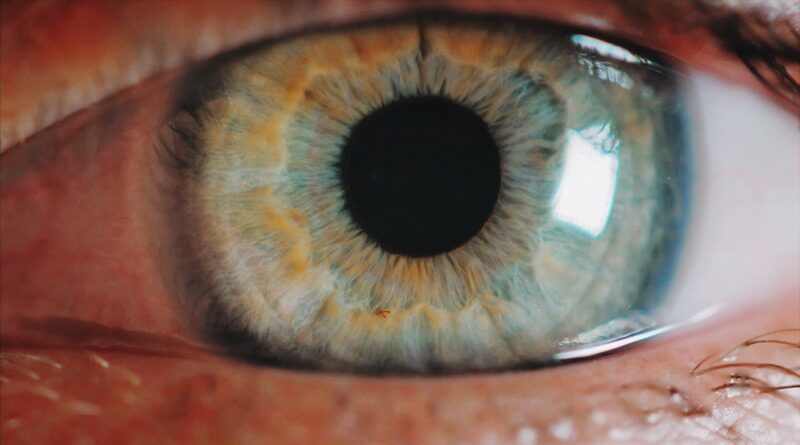
  • 2.4 billion irises
  • 12 billion fingerprints

Here is the video:


What are your thoughts on India’s UID project? Will it be successful at its proposed intentions or exploited by the government?

Biometrics in Healthcare — One to Many Identification as a Way to Eliminate Patient Fraud

Checking in at the Dr's Office

Healthcare professionals are catching on to the value of using biometrics for patient identification. As cases of medical identity theft increase and liability mounts, the industry has been turning to biometrics to ensure 100% patient identification accuracy, safeguard patient health, eliminate medical identity fraud, and cut costs. In addition, biometric patient identification systems instantly interface with any electronic health record or patient management software which means they can be up and running quickly without any database or code-level integration needed. Seamless interface capability helps smooth the transition from a more traditional means of identifying patients (name, DOB, social security number) to biometrics, a more modernized method that uses physiological characteristics of the human body to identify a patient.

Before you consider investing in a biometric patient identification system, it is important to understand the two fundamental differences in how back end biometric engins/systems/algorithms authenticate an individual:

a) 1:1 (one to one) verification – This method of authentication answers the question: Am I who I claim to be? and involves confirming or denying a person’s claimed identity. For example, when used in patient identification a patient would present a form of identification (driver’s license, social security card, insurance card, etc.) and after their record is pulled up they would then scan their biometric information to verify that they are the same person their identification states they are.

b) 1:N (one to many) identification – This method of authentication answers the question: Who am I? and the system must identify a person from a list of users in the template database. For example, when used in patient identification a patient would scan their biometric information first which immediately pulls up the patient record associated with their template before presenting any other form of identification.

Why is it important to understand the differences between biometric verification and biometric identification when it comes to eliminating medical identity fraud and duplicate records? Relying on 1:1 verification can create problems during patient registration. Since medical records are usually associated with a person’s date of birth or social security number, 1:1 verification creates the possibility of a person using a forged, fake or stolen ID to link their biometric identity to another patient’s record. Furthermore, since ID’s or insurance cards can be forged repeatedly then it’s possible that multiple medical records could exist for the same person all using the same biometric template. 1:1 verification would not catch this at registration.

The key to eliminating patient fraud is to catch a perpetrator at the time of registration before services are rendered. 1:N matching allows a healthcare facility to prevent medical identity theft by instantly performing a dedupe of their records before the record is created.

Understanding how biometric patient identification works and the functionality of the backend system is essential to working towards the ultimate goal of improving patient care. Eliminating patient identify fraud and lowering medical liability litigation costs  is key for the healthcare industry to maintain economic vitality to continue the fight of safeguarding our health.


M2SYS Releases White Paper on Using Biometric Technology To Eliminate Time Theft, Tighten Compliance

RightPunch soft clock for time and attendance

RightPunch soft clock custom employee time and attendance data interface

We are proud to announce that we have recently released a free white paper entitled: “Eliminating Time Theft, Establishing Accountability and Increasing Productivity with Biometric Technology.”  This  white paper begins with a look at the problems lack of employee accountability creates for a business and how it negatively impacts efficiency and profitability.  It then examines the increasing problem of employee time theft (offering in depth look at actual examples like extended lunch breaks, lollygagging, etc.) and how it impacts a businesses bottom line, causing billions of dollars of losses each year.  The white paper then studies limitations that traditional employee time and attendance methods pose including; sharing personal identification numbers (PIN’s), replacing stolen or lost employee ID badges, cost of resetting passwords and more.  We then explore monetary and productivity losses from inefficient payroll techniques including detailed charts and graphs that break down the numbers and present alarming statistics on just much these factors can drain profitability.

The white paper then discusses the positive impact that biometric identification technology has on employee time and attendance providing concrete examples on realized monetary savings and the direct links of adopting biometrics to increase risk mitigation.  Next we break down the different biometric modalities (fingerprint, finger vein, palm vein and iris recognition) providing the benefits of each as well as a detailed modality usability and accuracy chart.  We finish up the white paper by comparing a PC-based biometric “soft” clock with a wall mounted biometric time clock.

We hope that this white paper is helpful for our readers to gain a more thorough understanding about the value of biometric technology for time and attendance and the advantages that it brings compared to other more traditional forms of employee identification.  Please fill out the contact form on the right if you would like to receive a copy of the white paper, or click on this link:

http://m2sys.com/eliminate-time-theft-with-biometrics-white-paper.htm

Thank you for sharing this post with anyone that you feel may benefit!

Biometric Modalities: What makes a “Good Biometric?”

The ear as a biometric identifier

Ears


The following is a guest post from Jason Hodge, Vice President of Business Development for SecurLinx.  SecurLinx specializes in networked biometric deployments and multi-modal biometric integration.  You can read more about biometric technology on the SecurLinx blog which can be found at http://securlinx.blogspot.com/


Iris, Retina, Face, Fingerprint, Finger vein, Palm geometry, Palm vein, gait, ear, DNA, body odor, voice, typing rhythm, signature recognition.  The range of human physical traits and behaviors offers fertile ground for scientists interested in quantifying them for use in identifying individuals.

Two main forces have influenced the selection of biometric identification modality from the near limitless choices: Convenience and Necessity.

Face and fingerprint have been by far the most convenient from both scientific and deployment perspectives.

Scientists need data to develop the algorithms that biometric systems use to identify individuals.  For face and finger, data was never a problem.  Bureaucracies have been collecting both for a century.

In deployment, it’s easy and convenient for participating individuals to interact with the technology.

Necessity, playing its usual role, has driven the development of other biometric modalities.  From a development perspective, given enough data, time and money, I suspect any definable aspect of the human anatomy could be used as a biometric identifier.

In instances where teeth are all that is known about an individual, they are used for high confidence identification.

As long as the telephone is with us as a ubiquitous communication tool, there will be significant demand for voice recognition no matter the challenges.

In order to displace finger/hand and face/eye biometrics in wide scale deployments, the newer biometric modalities will have to out-compete them on two levels, in the lab and in the market.  But in order to thrive as high value-added tools in highly specialized deployments they just need to help solve a high value problem.

Any biometric modality can be useful, especially if it’s the only one available.

Jason can be reached at Mail: blog@securlinx.com Twitter: @SecurLinx URL: www.securlinx.com

Mizan Rahman Recognized as 2011 Technology Innovator by InfoWorld

Earlier last week, Mizan Rahman (M2SYS CEO/CTO) was recognized by InfoWorld as a 2011 Technology Leader for creating Hybrid Biometric Platform, a multi-modal biometrics system that supports fingerprint, finger vein, palm vein and iris recognition. Details of the award and information about why Mizan created Hybrid Biometric Platform can be found here:

http://bit.ly/mKG569

We are proud that Mizan was recognized as a Technology Innovator for creating Hybrid Biometric Platform, a true testament to the will, creativity and hard work that Mizan injected into the project and the biometric software engine that resulted. Mizan is honored and humbled by the recognition from InfoWorld and even more pleased that many of our customers are actually using Hybrid Biometrics and reaping the vision that Mizan had for this system.

Congratulations Mizan!